Amidst the vast highlands of Duc Long, Duc Thong, and Van Trinh communes in Thach An District, Cao Bang Province – where mountain ranges fade into the early morning mist and the scent of cinnamon and star anise lingers in every breeze – more than just plants; they are the very breath and lifeblood of the six local ethnic groups: Tay, Nung, Mong, Dao, Kinh, and Hoa. Here, each family usually owns only a few hectares of cinnamon or star anise trees – their most precious asset, alongside buffaloes, cows, and pigs, which serve as the second source of income.
As industrial zones in other provinces are far beyond reach, local young people focus almost entirely on farming and livestock. Their livelihood depends heavily on the two cinnamon and star anise harvest seasons each year: the spring–summer harvest from March to May, and the autumn–winter harvest from August to December. Yields vary from year to year, and prices fluctuate depending on the market. Recently, a typical household shared that they harvested 1 ton of fresh cinnamon in the spring–summer crop of 2025, earning about 27 million VND (around 1,000 USD), while the star anise crop failed, bringing in no income. This money sustains a six-member family spanning three generations under one roof – two elderly parents, a couple, and two school-aged children. What’s more, farmers must wait until the seventh or eighth year after planting before they can harvest organic cinnamon and star anise – a long period of patience and hope that these two crops will eventually bring a stable and decent income for their family.
Every cinnamon tree is a treasure trove of nature: its bark, leaves, flowers, fruits, charcoal, and roots – all have their uses. But the bark and leaves are harvested most often. The Cao Bang authorities prohibit mass tree felling, requiring instead partial harvesting and immediate replanting, so that the cinnamon forests remain evergreen. Thanks to this policy, Cao Bang consistently ranks among the provinces with the highest forest coverage in Vietnam.
The journey from the cinnamon tree to the final product on the family dining table:
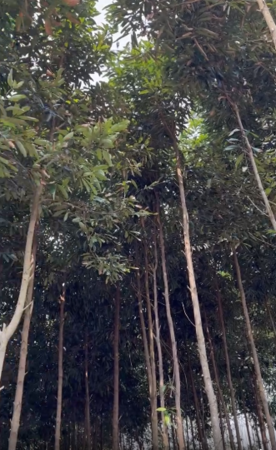
From cinnamon forest…
Farmers harvest the bark from mature cinnamon trees:
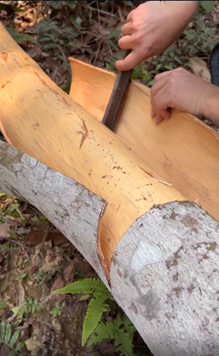
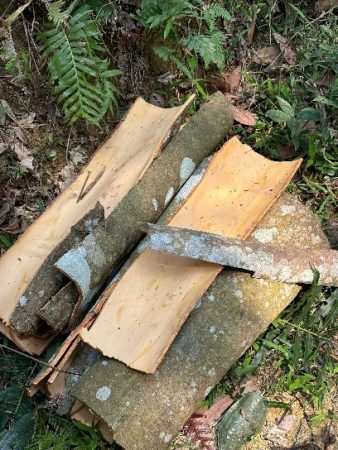
Freshly harvested cinnamon bark:
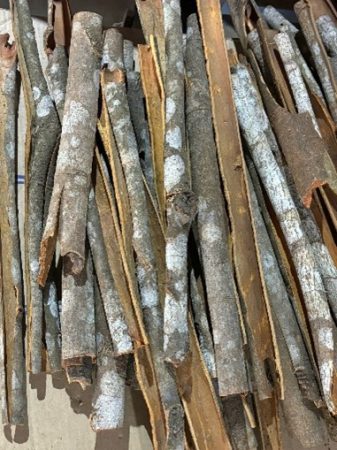
Dried cinnamon bark:
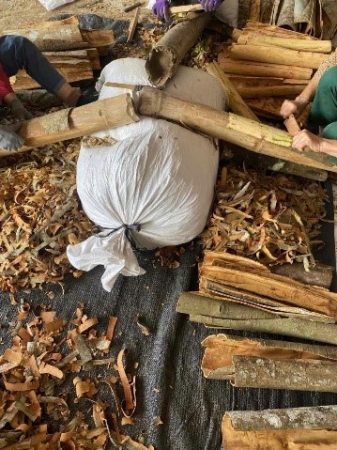
Some customers prefer cinnamon with the outer layer removed. In this process, local farmers scrape off the outer bark to improve flavor and appearance:
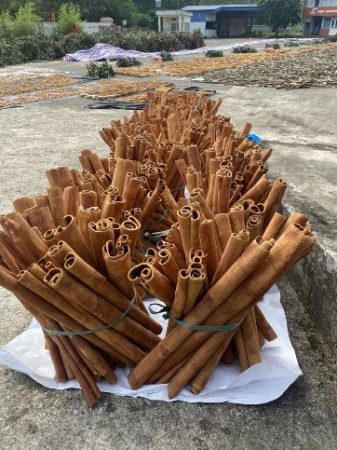
Cinnamon sticks after being scraped and dried:
If customers request cigarette cinnamon, local farmers split the cinnamon bark to let it curl naturally, then cut it to the desired length: 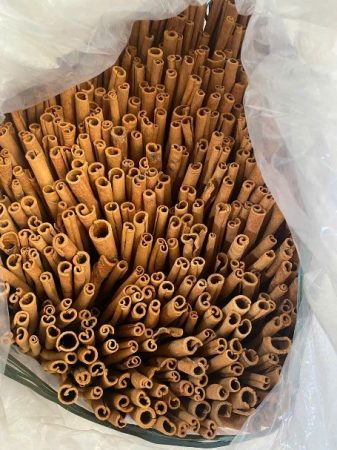
Cinnamon cutting in factory:
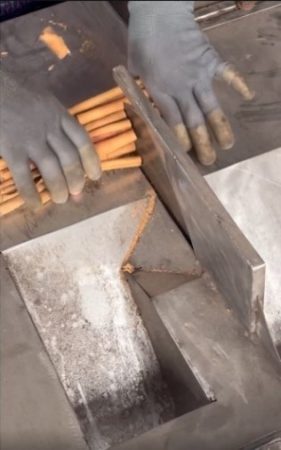
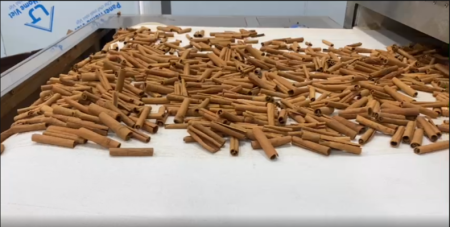
Before packaging, Dace steams the cigarette cinnamon:
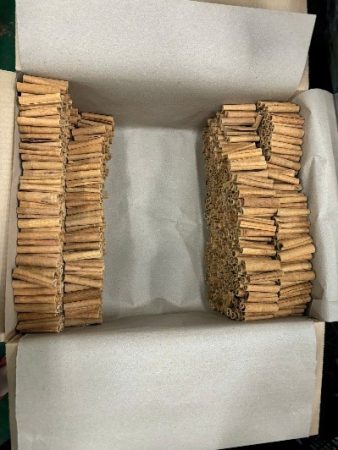
Finished cigarette cinnamon products:
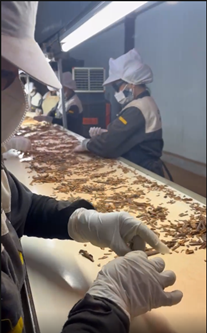
Workers remove impurities on a conveyor belt equipped with magnets at both ends:
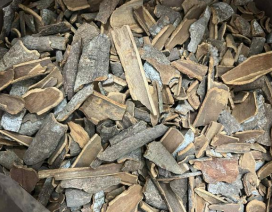
Finished broken cinnamon with bark for export:
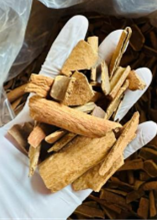
Finished broken cinnamon without bark for export:
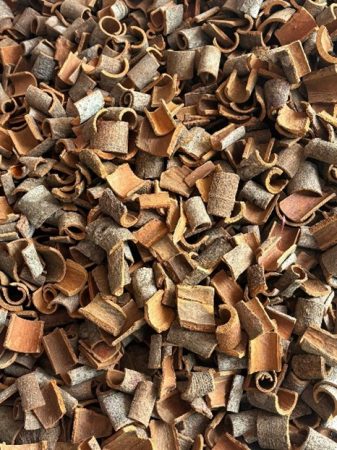
Finished square cut cinnamon products:
Finished cinnamon TBC products:
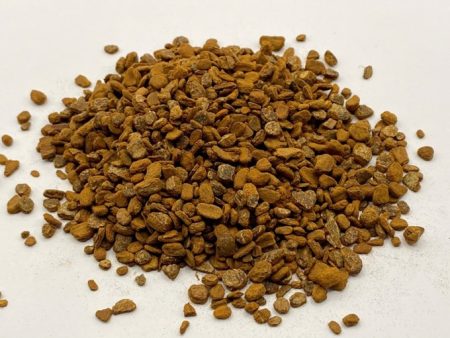
Finished cinnamon powder product:
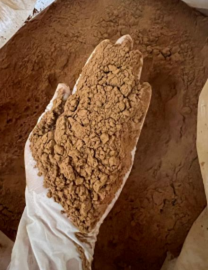
As with cinnamon, our production process of star anise products fully meets quality and organic standards. Each stage is carried out under strict supervision to preserve the natural aroma and flavor while ensuring food safety:
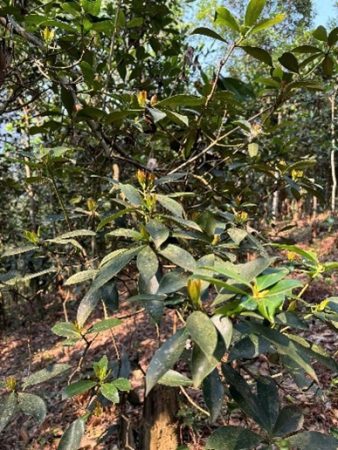
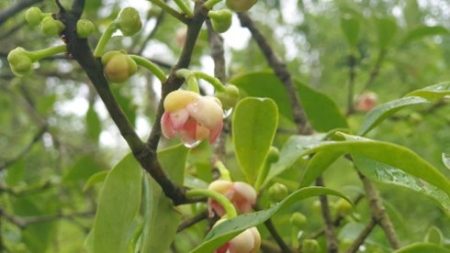
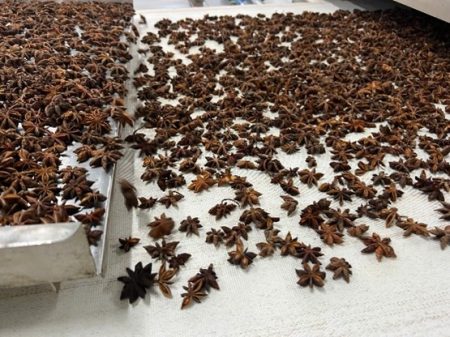
Star anise streaming:
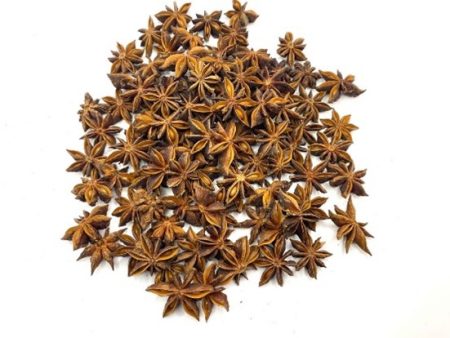
Finished star anise product:
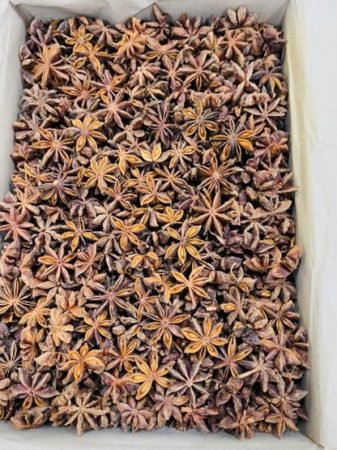
Star anise final product packaging:
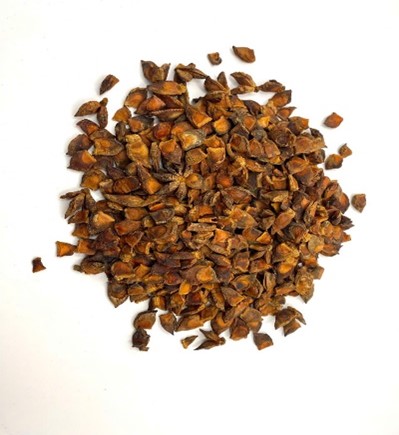
Finished broken star anise products:
There are four major cinnamon-growing regions in Vietnam: Yen Bai (a northern mountainous province near Cao Bang), Quang Ninh, Thanh Hoa–Nghe An, and Quang Nam–Quang Ngai. According to many local residents, most cinnamon trees cultivated there originated from Yen Bai cinnamon stock introduced in the 1990s. Cinnamon from Van Trinh has larger leaves than those from Duc Thong and Duc Long; and The cinnamon in all three locations has been genetically identified as Cinnamomum cassia (Vietnamese cinnamon), GenBank code: OQ459359.
Both Duc Long and Duc Thong cinnamon varieties have high essential oil content, with cinnamaldehyde levels exceeding 80% in the oil. Duc Thong cinnamon has high Coumarin levels, similar to cinnamon grown in the other three regions of Vietnam, while Duc Long cinnamon has low coumarin content – below 1,000 mg/kg – meeting European market standards. The flavor profile also differs: Duc Thong cinnamon is notably spicier, whereas Duc Long cinnamon is richer and sweeter.
Star anise from Van Trinh and Duc Thong (Illicium verum Hook.f) is of high quality, with an essential oil yield of 2.5 – 3% and a melting point of 17.4 – 18 °C, meeting European market requirements. Research conducted by DACE over many years shows that heavy metal content in cinnamon and star anise from this region is very low – for example, lead levels are consistently below 1 ppm. This is attributed to the fact that cinnamon and star anise are grown in high mountainous areas where the use of pesticides is difficult, far from industrial pollution sources, and in soils with unique characteristics.
For more than a decade, DACE has been closely working with local communities: providing organic farming training; building greenhouse facilities for the production of bio-fertilizers to improve yields while maintaining organic standards; seeking and securing support from governmental and non-governmental organizations to research high-yield, economically efficient cultivation methods suited to local conditions; and guiding farmers with a commitment to stable product purchasing.
Thanks to these efforts, cinnamon bark, branches, and other raw materials from remote villages have been transformed into cinnamon powder, cigars, sticks, chips, and cuts that meet international standards and are exported worldwide.
The fragrance of cinnamon – the fragrance of sharing.
Each time a package of Cao Bang organic cinnamon reaches an international customer, it is not only a spice that warms the dish, it also carries the warmth of Vietnam’s mountains and forests, and represents the trust and livelihood of ethnic minority families in highland regions.